There was a cute baby in the seat across the aisle from me recently on a plane. His dad was trying to get some work done on his laptop, and the baby wanted to help. Each time the baby put his chubby little fingers on the keys of his dad’s laptop, the dad patiently took the baby’s hands off the keys and told him, ”no.”
The baby looked like he understood, even tried to restrain himself for a few seconds by putting his hands together, and then there he would be again, helping out his dad. So adorable. This went on for a long time.
Babies want to do whatever their grown ups are doing. They can’t help it!
So many parents ask me, “How do I get my 3-year-old to play the piano?” My answer is simple, “The same way you got them interested in talking, walking, eating treats, or typing on your computer.”
Think about how you got your baby to talk, for example. Did you have talking lessons? Did you give your baby stickers and rewards for saying “blblblblbbl?” My guess is no. That would seem so silly. Babies naturally talk because they want to be part of the conversation their parents are having. Babies are wired to learn language, to imitate, to listen and respond – when they are developmentally able.
We’re naturally very patient with our babies and even toddlers as they learn to speak, because it’s something we’ve come to expect. From the day your baby was born until they said their first word, you were talking to your baby, reading them little books about piggies and cows, showing them the pictures, making oinking sounds, copying the tiny sounds your baby made, talking around your baby, and… waiting. There’s a developmental process that’s going on inside your baby’s head as they’re learning to talk, and most of it is unapparent on the outside.
So often when parents ask me this question, I ask them, “How’s your playing?” And almost always the answer is, “they just don’t want to do it.” Then I say, “No, I mean You.” “Oh, you mean me?” “Yes.” Then there’s the sheepish reply, “well, I guess I could play more.” Don’t be embarrassed if this is you. It’s a new concept. For thousands of years parents have been teaching their babies to talk by talking and listening, by playing games like peek-a-boo, counting their fingers and toes. All of these activities help your child to learn to talk – eventually, and you do them naturally. We, as a culture, seem to have lost our tendency to interact this way with our kids when it comes to music.
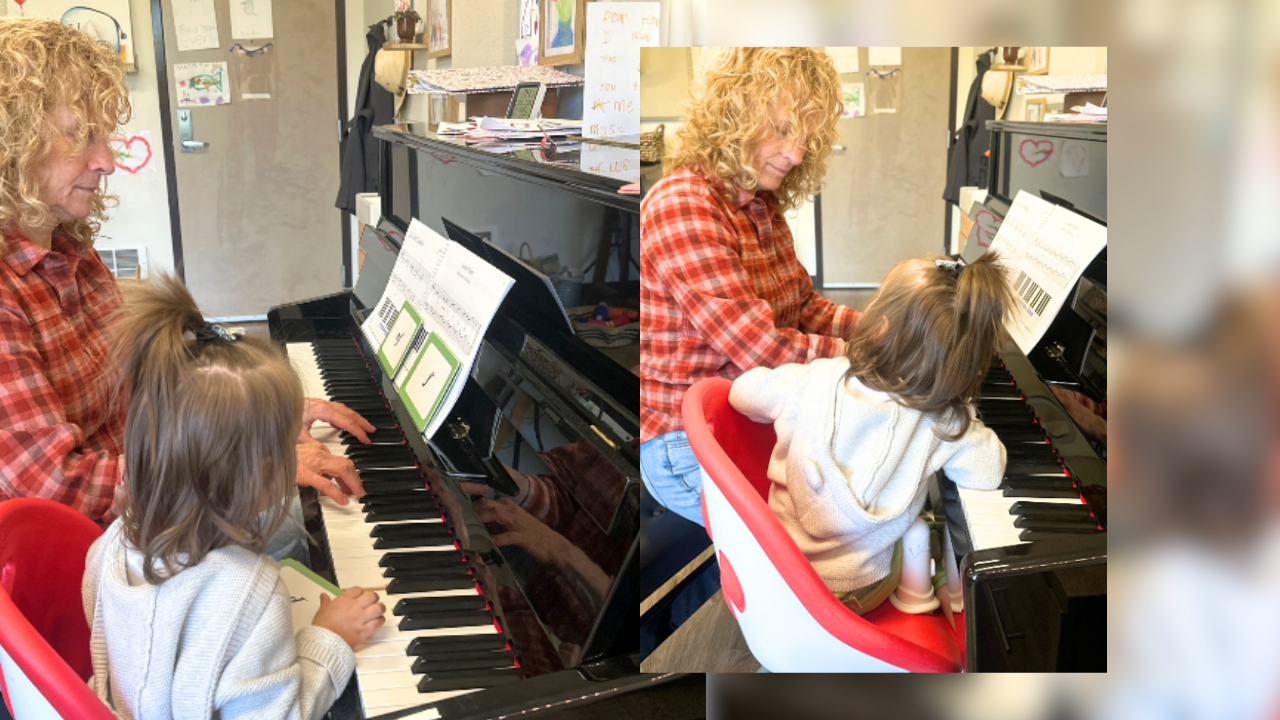
The idea of teaching your baby piano specifically, is pretty new. When I was trained to teach littles, 30 years ago, I was only taught to work with 3 – 5 year olds. There was no thought of teaching babies. As it became apparent to me that the babies who tagged along in my preschool classes were the ones who, as they grew, couldn’t be dragged from the piano, I realized we were missing our demographic completely by not focusing on these little geniuses. I searched for materials to use, and there weren’t any. Even now, I hear piano teachers saying it can’t be done.
The issue is not whether they can learn it, it’s whether we can consistently offer them the experience of Us making music, and patiently wait for our babies’ or toddlers’ development to allow them to show us what they’ve learned. There’s so much going on in their growing brains while they’re flailing their arms and legs in the air, trying to crawl or roll over, and eventually driving cars around, making pretend ice cream, and coloring. We’re just not used to this process when it comes to music lessons. We want action, commitment, and cooperation. But we didn’t demand those things when they were learning, for months and years, to talk, to eat treats, or to type random things on our computers.
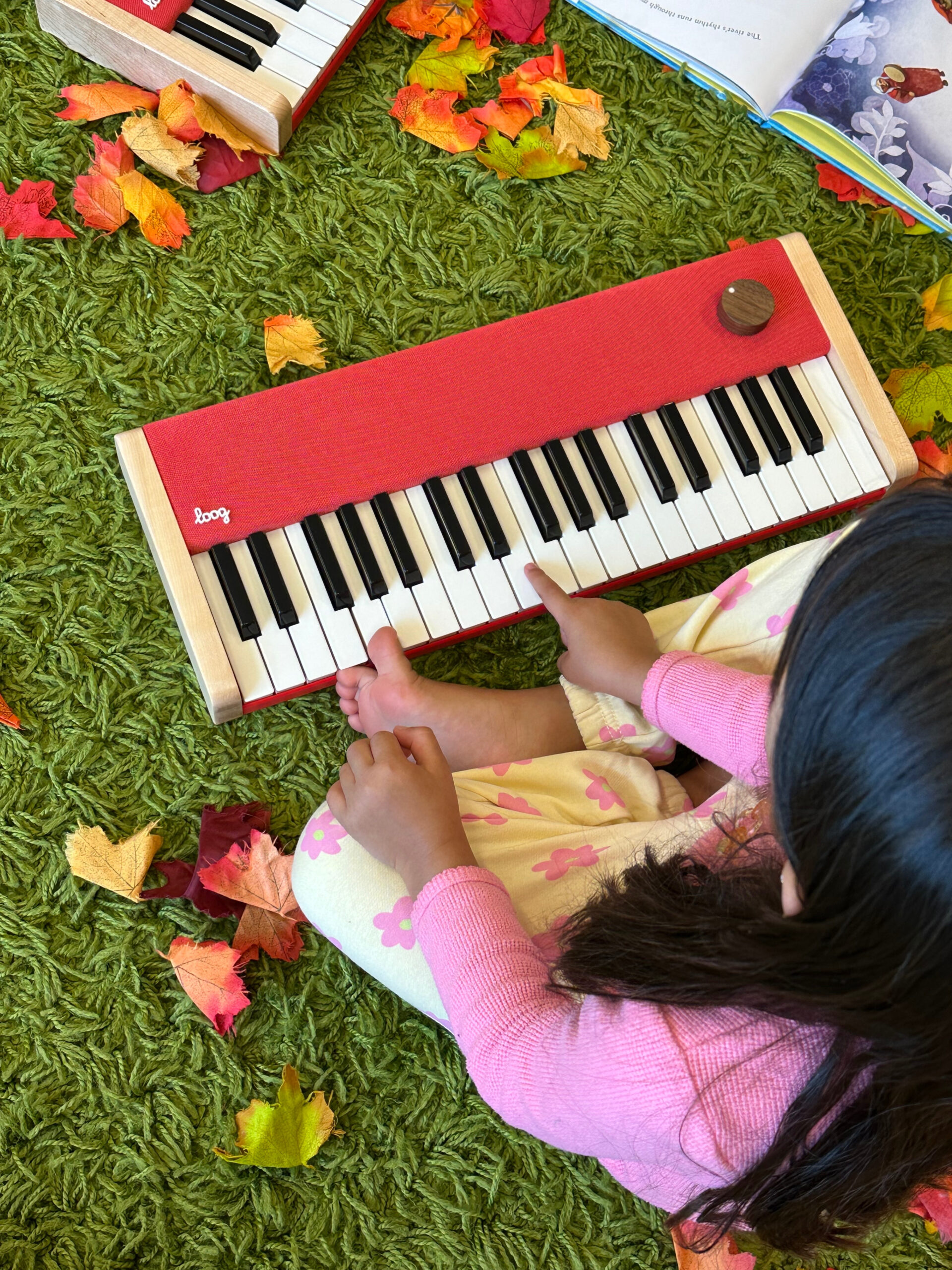
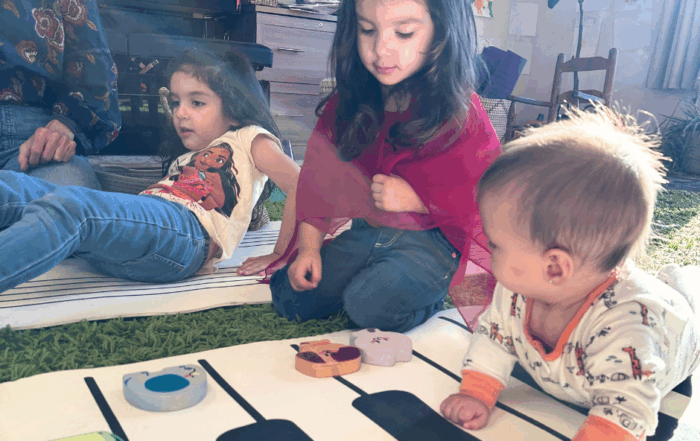
The next time you’re wondering, “How can I get my baby more interested in music?” remind yourself that you’re your child’s favorite mentor. They love to copy you. They’re appropriately not good at taking instructions, they just want to watch and listen – and you might not think they’re even doing that. If they’re nearby while you’re doing something, they’re picking it up more than you think. They’ll jump in when it feels safe, and when they are developmentally ready. In the meantime, let your baby, toddler, and preschooler see you having so much fun learning to play, while they do the things they do.


Leave A Comment