hen I was 8, my mom found me the best piano teacher she could afford, and signed me up for lessons with her. Her name was Ruby LeSueur. She was such a boss with her beehive hairdo and cat-eye glasses. As a painfully shy 8-year old, I was a little afraid of her, but I loved loved loved my piano classes, and especially the group classes we sometimes had. In group classes we learned how to improvise, using a Question and Answer motif that we could play with our classmates. We learned how to use the chord structure to help us create little melodies that sometimes worked, and sometimes didn’t. When they didn’t, we laughed and moved on. It was so much fun! Over time, I learned so much from these experiences. As a child, I had no idea what this was doing for my brain, or for my ability to someday become a composer and an innovator. If I could see Ruby LeSueur today, I would hug her and kiss her. She gave an incredibly shy little girl a voice that she could use for the rest of her life.
I learned more about the value of improvisation during my piano teaching education as an adult. I learned that teaching students how to improvise would help them through tough situations, like when they forgot part of their solo in a performance. By being able to improvise, they could continue to play something meaningful until they remembered their original piece, and continue without falling apart. That’s a useful skill that has saved me many times, both musically and otherwise.
Have you ever heard an insane guitar solo, or listened to jazz players improvise? It seems to some people like a nearly impossible talent that a very few people are born with. Actually, everyone is born with the ability to improvise, we do it every day!
We talk using established words, but we make up what we’re going to say on the fly, most of the time. We don’t go around quoting sentences the exact way we read them from a book, or the exact way we were taught to say them – most of the time. We use the words we know, and in the moment, we select the ones we want to use to say what we mean. That’s the same thing as musical improvisation.
I think a lot of people think musical improvisation is just a musician playing any random notes, and that somehow it magically sounds good – or weird, depending on how you look at it. That would be akin to when we want to say something new, we just make up random sounds and hope someone understands. That’s just not how it works, in speech or in music. Musical improvisation is almost always done within a structure: chords, scales, melodic phrases and patterns that have been practiced over and over and over. Like the words we say, these musical patterns and phrases are accessible at any given moment to be used to create a new musical statement.
The real question is, why is it important to teach our babies, toddlers and preschoolers how to do this?
Scientists have looked more deeply into the value of musical improvisation. A 2008 study that I especially like, by Charles J. Limb and Allen R. Braun, shows just how important musical improvisation is for developing the parts of the brain that help your child access language, and the ability to stop worrying.
You can watch the Tedx talk here:
One of my big takeaways from this study is that in improvisation, the part of the brain that is self-conscious is deactivated – the part that worries what other people are thinking. There are times when it would be nice to shut this down. Worry can be debilitating, when you want to express yourself or think of something new, and especially when you want to regulate your emotions. Having the ability to get into a flow where you’re not worrying about what other people think is important when you want to be creative, and for general mental health. For kids, regulating emotions is a very big part of the journey of growing up. Everyone, adults included, struggles with emotional regulation from time to time. I have personally found that going to the piano and playing just to play can be very cathartic.
Another big one is that in creative mode, the language, or expressive parts of the brain are activated. Do you remember what a relief it was when your child started to actually tell you in words what they wanted? Effective communication is an important key to a happy life. Helping your child grow that part of their brain early on will help them throughout their life in every way I can think of.
Little kids can be very creative, and depending on how we respond to that, they can continue to use these wonderful parts of their brains and their personalities. If you’ve been around little kids, you’ve noticed they’re great at pretending. They use the constructs they learn from us biggies, and use them in their play. This is how they figure out how to navigate in a world that is largely a mystery to them.
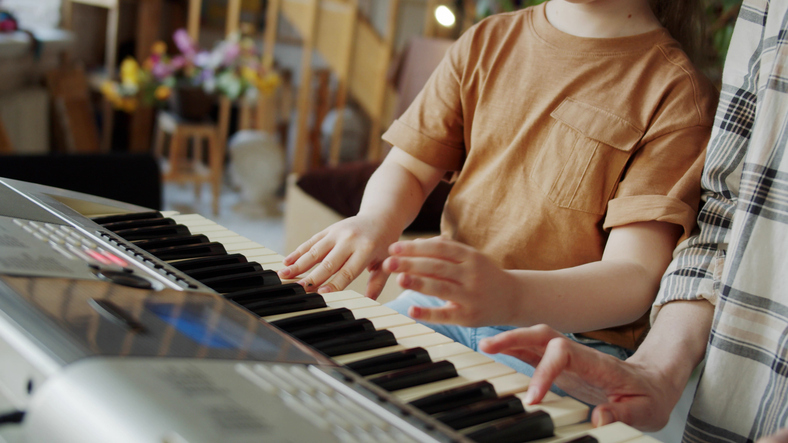
Of course we’re going to give our kids all kinds of facts to memorize, and rules for how to get along. It’s important though, that as we’re teaching them facts, figures, and even music theory, that we encourage them to keep playing, pretending, and making things up – or improvising. This is something about childhood that we never want our kids to lose as they grow up. Teaching them how to improvise musically, beginning with very tiny structures, such as stepping up or down on the keys, staying or skipping, choose white keys or black keys, while you play a bass pattern, will help to free your child from the worry of always playing “correctly” while helping to grow important parts of their brains and their personalities.
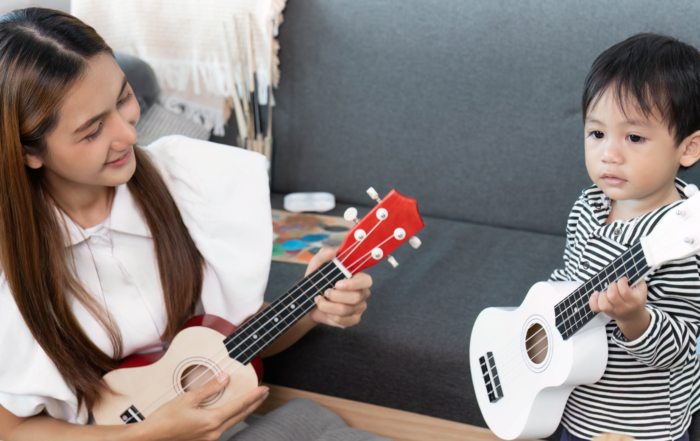
As you probably noticed in the video, jazz improvisation and rap are social building activities. Being able to have musical conversations with your kids that aren’t pre-written, is incredibly bonding. In my experience as a musician, as a teacher, and as a mom and grandma, this is the most valuable reason to teach your child how to improvise.
As always, have so much fun!


Leave A Comment